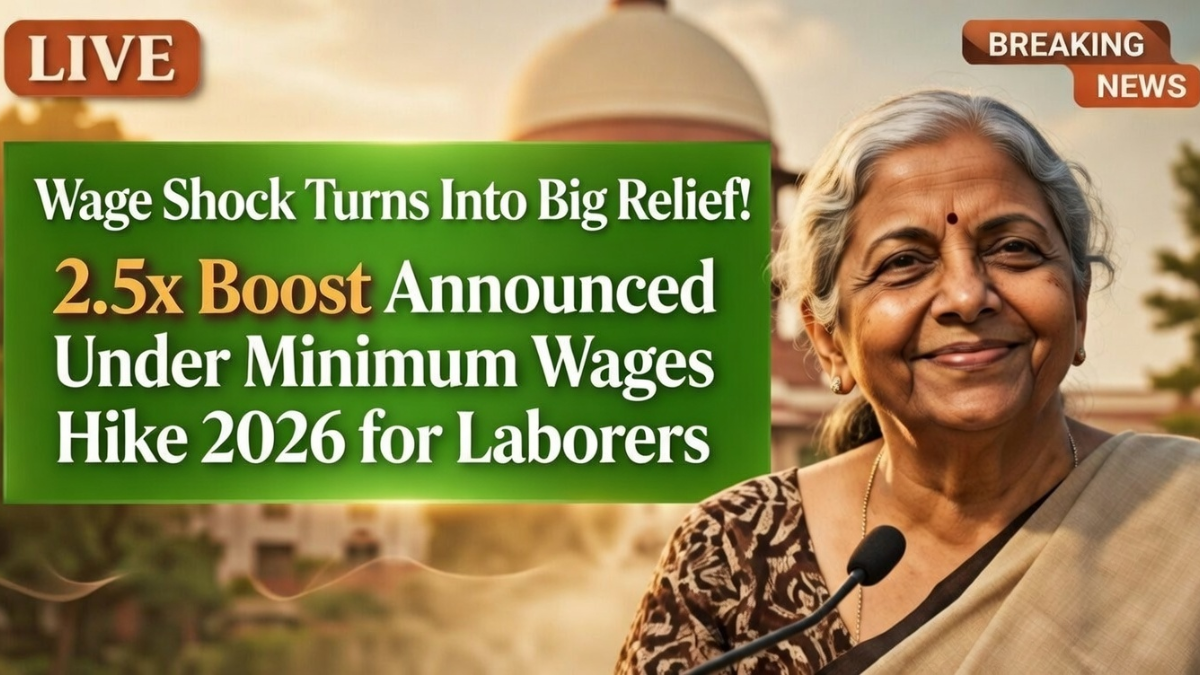
In a major development that could transform household incomes across the country, the Minimum Wages Hike 2026 has been unveiled today with reports of up to a 2.5x boost in certain categories. For millions of daily wage earners and contract workers, this announcement comes as a powerful financial relief at a time when living costs continue to rise.
The move is being described as one of the most impactful labor-focused decisions of the year, directly affecting workers in construction, manufacturing, agriculture, and various unorganized sectors.
What the Minimum Wages Hike 2026 Means
Minimum wages are the legally mandated lowest payments employers must provide to workers. These rates are periodically revised to match inflation, skill levels, and economic conditions.
The 2026 revision reflects a significant upward adjustment in several worker categories. In some sectors and skill brackets, wages are expected to increase sharply, offering what is being described as a 2.5x boost compared to earlier benchmarks in specific classifications.
This revision aims to strengthen financial security for laborers and improve overall livelihood standards.
Who Will Benefit From the Hike
The updated wage structure is expected to cover:
Unskilled workers in construction and daily wage sectors
Semi-skilled and skilled laborers in industrial units
Contract workers in infrastructure projects
Workers in agriculture and allied activities
The actual increase may vary depending on skill level, region, and sector classification, but the broader impact is expected to be widespread.
Why This Increase Is Crucial in 2026
With rising prices of food, fuel, housing, and healthcare, low-income workers have been under mounting pressure. Many laborers depend on daily wages to meet immediate family needs, leaving little room for savings.
The Minimum Wages Hike 2026 is intended to bridge the income gap and enhance purchasing power. Higher wages could also stimulate local economies as increased spending power circulates within communities.
This move is also aligned with ongoing efforts to formalize labor markets and improve social security coverage.
How Much Could Wages Increase
While final figures depend on official notifications and state-specific adjustments, early indications suggest notable increases across different categories.
| Worker Category | Previous Daily Wage | Revised 2026 Wage | Expected Impact |
|---|---|---|---|
| Unskilled | Earlier rate | Higher revised rate | Strong income boost |
| Semi-Skilled | Earlier rate | Higher revised rate | Significant relief |
| Skilled | Earlier rate | Higher revised rate | Major financial gain |
Actual numbers will vary by state and sector, as wage determination often considers local cost-of-living factors.
Impact on Employers and Industry
While the hike brings relief to workers, employers may experience increased operational costs. Industries relying heavily on labor may need to adjust budgets and pricing structures accordingly.
However, experts believe that improved worker income can enhance productivity, reduce attrition, and strengthen workforce stability in the long run.
Balanced implementation and compliance monitoring will be crucial to ensure smooth execution without disrupting industrial growth.
What Workers Should Do Now
Laborers and contract workers should stay updated with official notifications issued by labor departments. Employers are required to implement revised wage rates from the effective date mentioned in the announcement.
Workers are encouraged to verify updated wage structures with their contractors or employers and ensure compliance with the new guidelines.
Conclusion
The unveiling of the Minimum Wages Hike 2026 with reports of up to a 2.5x boost marks a significant moment for labor welfare. For millions of workers, this decision offers immediate financial relief and long-term stability.
As implementation begins, the true impact of this wage revision will be reflected in improved living standards and stronger economic participation by the labor force.
Disclaimer: This article is for informational purposes only. Readers should refer to official government notifications for exact wage rates and implementation details.