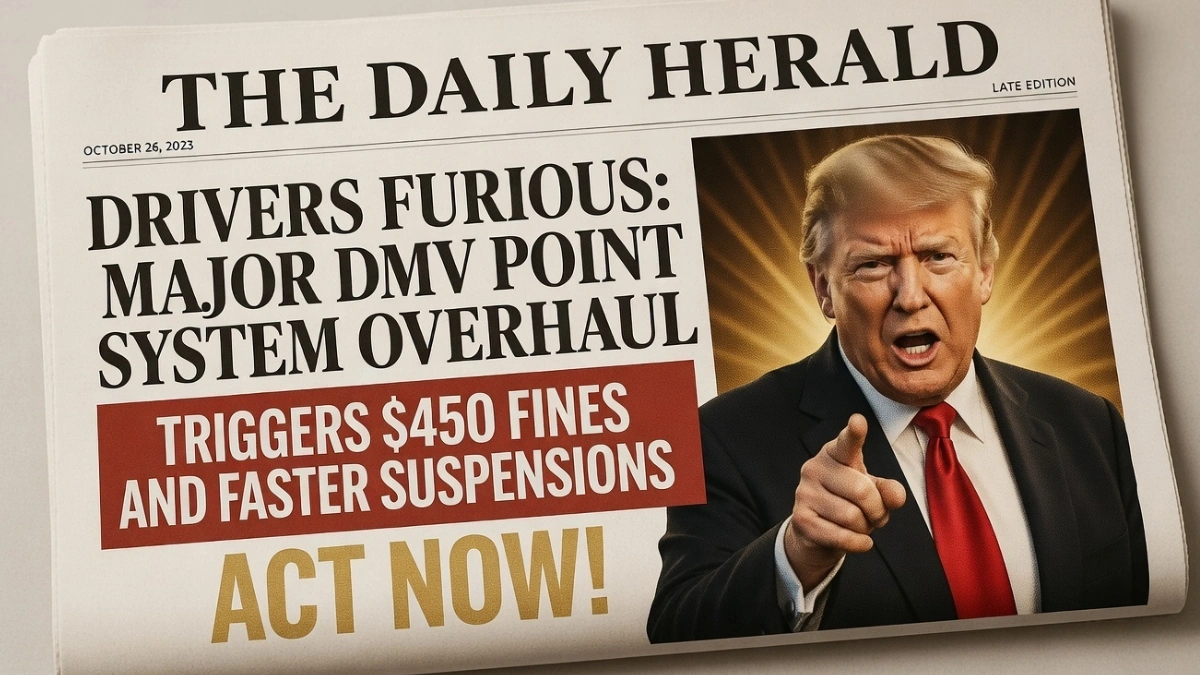
In 2026, several state DMV offices implemented a major point system overhaul, increasing fines and reducing thresholds for license suspensions. Drivers face higher penalties and faster action for repeated violations, sparking frustration among motorists nationwide.
The changes are aimed at enhancing road safety and reducing traffic violations, but many drivers were unaware of the immediate financial and administrative impact.
Key Changes in the Point System
The overhaul includes lower points required for suspensions, higher fines for common infractions, and faster accumulation periods. Minor offenses such as speeding, running red lights, or distracted driving now carry higher financial consequences and point values.
State-Wise Sample Impact Table
| State | New Suspension Threshold (Points) | Average Fine ($) | Notes |
|---|---|---|---|
| California | 6 | 450 | Faster suspension for repeat violations |
| Texas | 7 | 420 | Increased fines for speeding |
| Florida | 6 | 430 | Points accumulate faster |
| New York | 5 | 450 | Stricter distracted driving penalties |
| Illinois | 6 | 440 | Repeat offenders affected sooner |
| Pennsylvania | 6 | 430 | Points reset delayed to 2 years |
The table shows sample state-wise suspension thresholds, average fines, and specific factors that could affect drivers under the new point system.
Who Is Most Affected
Drivers with prior violations, high commuting mileage, or commercial licenses are most impacted. Repeat offenders are now more likely to face suspensions and fines, even for relatively minor infractions.
How Drivers Can Respond
Motorists should review their driving record, understand the new point values, and avoid repeat offenses. Defensive driving courses and traffic safety programs may help reduce points and prevent suspensions in states where they are accepted for point reductions.
Conclusion
The 2026 DMV point system overhaul introduces stricter penalties, faster suspensions, and higher fines. Being aware of changes, monitoring driving records, and taking preventive actions can help drivers avoid costly violations and license suspensions.
Disclaimer: This article is for informational purposes only. DMV rules, fines, and point systems vary by state and are subject to official updates. Drivers should consult their state DMV office or official portals for the most accurate and updated information.