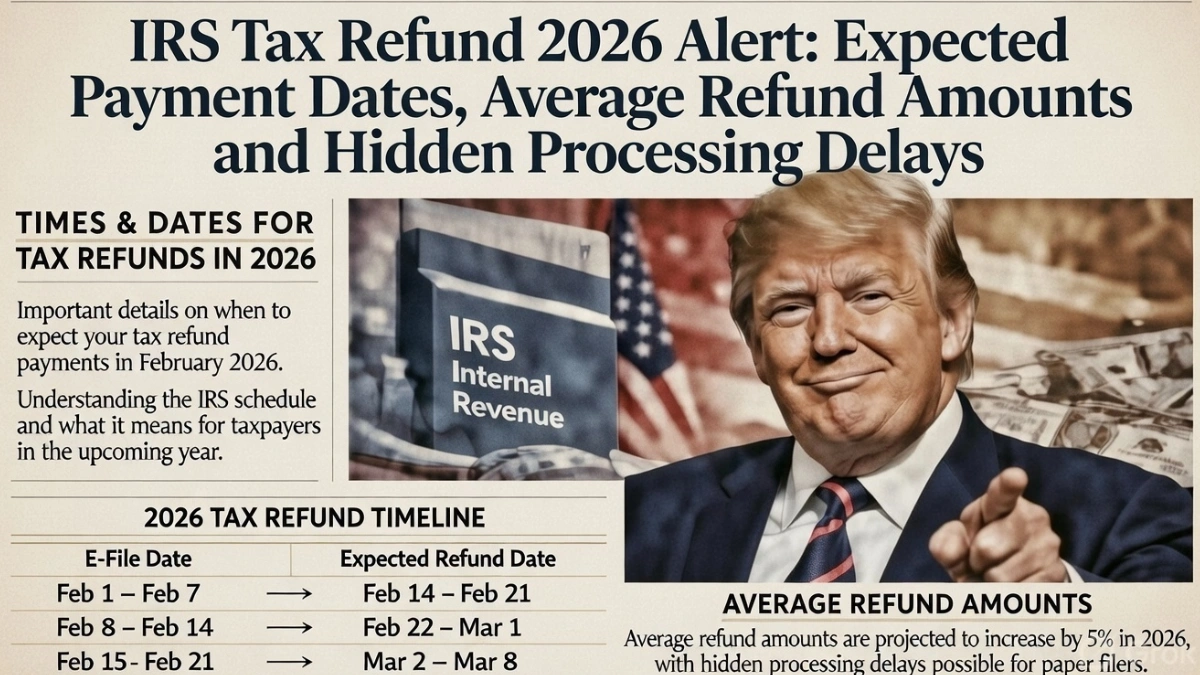
The IRS has announced expected payment dates and processing timelines for 2026 tax refunds. Millions of taxpayers are eagerly awaiting direct deposits or mailed checks, but new procedures have introduced some hidden delays.
Being aware of schedules and delays can help taxpayers plan personal finances and avoid surprises.
Expected Payment Dates
For most taxpayers, direct deposits are expected to begin in mid-February 2026, while paper checks may take 3–4 weeks longer. Refunds can vary based on filing method, errors, or additional verification requirements.
Early filers typically receive payments sooner, while late filers or those with complex returns may experience delays.
Average Refund Amounts
According to IRS estimates, the average tax refund for 2026 is projected to be $3,100. Refunds vary widely depending on income, withholding, tax credits, and deductions claimed during the filing year.
Hidden Processing Delays
Refund delays may occur due to identity verification, mismatched bank information, or corrections in tax returns. Certain credits, including the Earned Income Tax Credit (EITC) and Child Tax Credit, require additional review, potentially delaying refunds by several weeks.
State-Wise Sample Refund Table
| State | Average Refund ($) | Expected Direct Deposit Date | Notes |
|---|---|---|---|
| California | 3,400 | Feb 15–20 | High volume of filers, some EITC verification |
| Texas | 3,000 | Feb 17–22 | Standard processing |
| Florida | 3,100 | Feb 18–23 | Mostly direct deposit, minor delays |
| New York | 3,200 | Feb 16–21 | Includes additional identity verification |
| Illinois | 2,950 | Feb 17–22 | Mixed direct deposit and paper checks |
| Pennsylvania | 3,050 | Feb 18–23 | Some delayed refunds due to corrections |
The table shows sample state-wise average refunds, expected deposit dates, and reasons for potential delays in processing.
Tips to Track and Expedite Refunds
Taxpayers should use the IRS “Where’s My Refund?” tool, verify bank information, and file early to reduce delays. Correcting errors promptly and ensuring all documentation is complete can also speed up the refund process.
Conclusion
The 2026 IRS tax refund season may bring early payments for many, but hidden processing delays could affect others. Monitoring the official portal, filing accurately, and tracking refunds ensures taxpayers receive payments efficiently and avoid unexpected setbacks.
Disclaimer: This article is for informational purposes only. IRS refund schedules, amounts, and processing timelines are subject to official announcements. Taxpayers should consult the IRS website or a certified tax professional for accurate and updated guidance.